

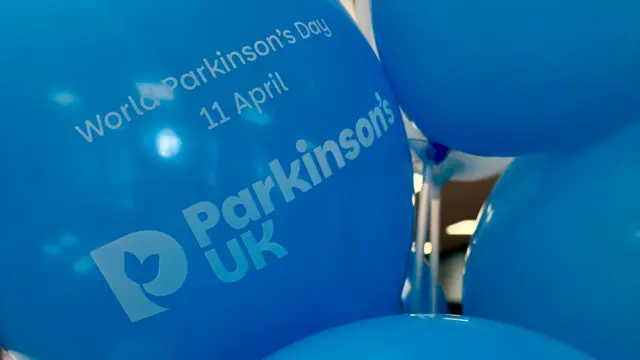
In 1817, James Parkinson published his ‘Essay on the Shaking Palsy’, recognising Parkinson’s as a medical condition for the first time. We mark his birthday every 11 April with World Parkinson’s Day.
It’s a time to come together, raise awareness and build connections. World Parkinson’s Day is a day for you, the Parkinson’s community.
What is Parkinson's?
Parkinson's is a progressive neurological condition.
People with Parkinson's don't have enough of the chemical dopamine in their brain because some of the nerve cells that make it have stopped working.
Around 166,000 people live with Parkinson’s in the UK. Parkinson's is on the rise. In the UK today, someone is diagnosed every 20 minutes. By 2050, the number of people with Parkinson’s worldwide will double to 25 million.
What are the symptoms of Parkinson's?
There are over 40 symptoms of Parkinson’s. From a tremor or stiffness, to problems with sleep and mental health. Everyone’s experience is different.
Common symptoms include tremor, rigidity (stiffness), slowness of movement, sleep problems and pain.
But not everyone gets the same symptoms. People have different experiences of how their condition changes or progresses. How Parkinson’s affects someone can change from day to day, and even from hour to hour.
You may hear Parkinson’s symptoms referred to as motor symptoms and non-motor symptoms.
Motor Symptoms
Motor Symptoms affect your movement and balance. They include:
- dyskinesia (involuntary movements) and wearing off
- Falls and dizziness
- Freezing
- Muscle cramps and dystonia
- Restless leg syndrome
- Rigidity
- Slowness of movement
- Tremor
Non-Motor Symptoms
Non-motor symptoms affect you in other ways that may not be easily seen by other people. They can include:
- Bladder and bowel changes
- Eating, swallowing and managing saliva
- Eye changes
- Fatigue
- Foot care
- Low blood pressure
- Mouth and dental changes
- Pain
- Skin and sweating changes
- Sleep
- Speech and communication
Behavioural symptoms
Behavioural symptoms can affect:
- Anxiety
- Depression
- Hallucinations and delusions - as a symptom
- Impulsive and compulsive behaviours in Parkinson's
- Thinking and memory changes
- Parkinson's and mental health
For more information about Parkinson's or how to get involved follow the link World Parkinson’s Day | Parkinson's UK